RICOCHETCapital
A Truly Contrarian Approach to Venture Capital
Data
The Data of Venture
of VC-backed startups fail to return capital.
Due diligence is a process that should avoid this problem. Most early bets are made on a feeling, not on a true survey of the early-stage market.
of companies that pass fund DD fail at IC.
Many of these companies have strong fundamentals. ICs are very political.
of investments drive returns.
Most funds chase the power law, but end up overpaying at the earliest stages because of hype and feelings.
The Error Matrix
Where Venture Goes Wrong
Many funds accept failure as part of the equation, we don't optimize for that kind of thinking
True Positive
Big Return
Type I Error
80% of VC-backed startups fail to return capital.
Type II Error
Missed unicorns. Ricochet Capital.
True Negative
Most startups live here.
The Problem
How Did We Get Here?
01
The Conformity Problem
Venture has been careerified. Best schools, best logos, getting into the deal the other top fund got into. The ecosystem rewards mimicry and conformity, but startup building and startup investing sit opposite conformity.
02
Investment Committee Bias
Most VC decisions are made by committee consensus. Committees are political and bureaucratic. What drives a yes or a no often isn’t objective investability, it’s how the partners are feeling that day.
03
Due Diligence
At big funds, DD has become a game of whether the analyst can get the deal past the principal who can get it past the partner. The work optimizes for internal approval, and the people at the top live in tech bubbles.
Thesis
We Invest in the Almost-Yes
High-quality deals that other top funds passed on for the wrong reasons.
01
Quality Companies, Top-Tier Vetting
Ricochet primarily invests in startups that reached the due diligence stage at leading VC funds. Their potential has been rigorously assessed and validated by industry experts before we ever take a meeting.
02
Passed for Non-Fundamental Reasons
These companies were passed on not because of business problems, but because of portfolio conflicts, timing, partner politics, and IC dynamics.
03
Our Strategic Advantage
We come from the world of startup building. Great founders don’t have a specific look or feel, but good businesses always do. We’ve trained ourselves to spot the winners across the thousands of startups we’ve met with over the last five years.
Proof
Almost Yes's
Every one of these companies was passed on by a top-tier fund — for reasons that had nothing to do with the business. Public record. Mostly self-reported by the funds themselves on Bessemer’s Anti-Portfolio and in founder retellings.
Airbnb
$75B+ public market cap
Passed by
Fred Wilson / Union Square Ventures (Seed, 2009)
The reason
USV passed on the seed. Wilson later wrote the public mea culpa “Airbnb” explaining they couldn’t get past the air-mattress framing. Paul Graham’s rejection emails from seven other investors are also public.
$2T+ public market cap
Passed by
Bessemer Venture Partners (1999)
The reason
David Cowan’s college friend rented her garage to Sergey and Larry. She tried to introduce him. His response, per Bessemer’s own Anti-Portfolio: “How can I get out of this house without going anywhere near your garage?”
$1.8T+ public market cap
Passed by
Bessemer Venture Partners (2004)
The reason
Jeremy Levine met Zuckerberg at a Doubletree in Philadelphia and told him, on the record, he should drop out of Harvard, and then passed on the round.
Stripe
~$91.5B last private valuation
Passed by
A long list of seed investors (2010–11)
The reason
Multiple seed funds passed on the Collison brothers because “online payments was a solved problem” and PayPal already existed. Sequoia and Y Combinator famously did not.
Zoom
IPO’d 2019, peaked over $150B
Passed by
Most enterprise VCs Eric Yuan pitched (2011–13)
The reason
Yuan has said publicly he was turned down repeatedly because the video-conferencing market was “done”, WebEx, Skype, GoToMeeting already owned it. Emergence Capital led the Series A others wouldn’t.
Snap
Public, ~$20B market cap
Passed by
Bessemer Venture Partners (2012/13)
The reason
Bessemer lists Snap on its Anti-Portfolio: “Byron Deeter sat with Evan Spiegel… Byron loved the energy but couldn’t see how it would ever make money.”
Shopify
$140B+ public market cap
Passed by
Bessemer Venture Partners (Series A)
The reason
Anti-Portfolio entry: a Bessemer partner met Töbi Lütke in Ottawa, was impressed, and still passed on the A round because “it’s just another e-commerce platform.”
Tesla
$1T+ public market cap
Passed by
Bessemer Venture Partners (Series C)
The reason
Bessemer’s own Anti-Portfolio: Byron Deeter passed because “the car business was too capital intensive” and the team “looked early.”
These weren’t bad investors. They were good investors making decisions inside processes that systematically over-weighted pattern-matching, market consensus, and committee comfort. Ricochet exists for the next list.
Our Differentiator
Reading Between the Lines, Investing in What Others Miss
01
Insider Experience
We’ve lived the founder journey across FinTech, AI, Future of Work, consumer, and more. We’ve built companies in the AI era. Most VCs have not.
02
Investor Access
We’ve built a network of investors through VC Village. They’re happy to pass us deals that couldn’t get through their ICs, and happy to share why.
03
The Venture Hedge
Our fund is the hedge against other funds’ bias. Thousands of venture funds try to get into the same deals as the top firms. We think differently. We take a stance in the same asset class on different assets.
Network
Our Network is the Moat
Our network creates compounding advantages for sourcing, value creation, and exits.
An invite-only investor community we built across Boston, NYC, SF, Chicago, Philly, Providence, and San Diego. We host founders, GPs, and LPs regularly.
Corporate Access Through Non-Profits
We partner with tech non-profits with deep relationships at the largest tech companies in the US and beyond.
We didn’t just build the in-person VC community. We also built the digital infrastructure for startup discovery.
Sweet Spot Valuation Range
Average post-IC valuation: $5M to $40M. Ideal for early-stage entry with meaningful ownership. These companies have already survived institutional diligence, materially de-risking our thesis.
IC passage validates product-market fit, team capability, and market opportunity, even when funds ultimately pass for non-fundamental reasons.
Meet the Partnership

Jonny Boyarsky
Managing Partner
Founder & CEO at FirstGlance. Founder of VC Village, an invite-only investor community across the country. BA Engineering, Northeastern. JD, BC Law.
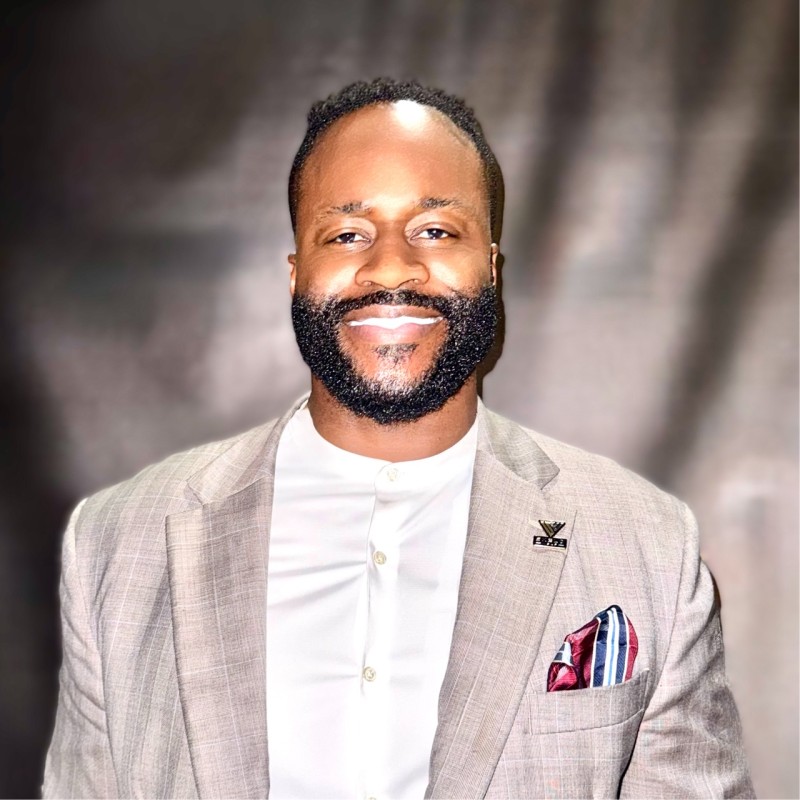
Kenny Anunike
General Partner
Super Bowl 50 champion turned founder. CEO of Skelo Wear, building the future of safety for athletes and high-risk professionals. Investor, board member, international speaker. BA & MA, Duke.
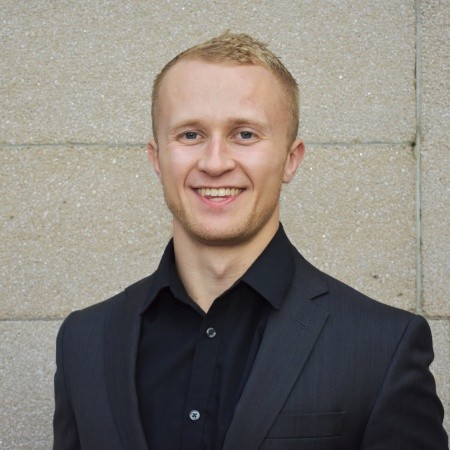
Eli Evenson
General Partner
Senior Finance Manager at Amazon. 8+ years scaling planning, forecasting, and operating decisions across global businesses. BA Economics, University of Washington.
Back the Overlooked Winners
Ricochet Capital sees potential beyond institutional bias. Together, we’ll prove the best investments are often the ones others almost made.